


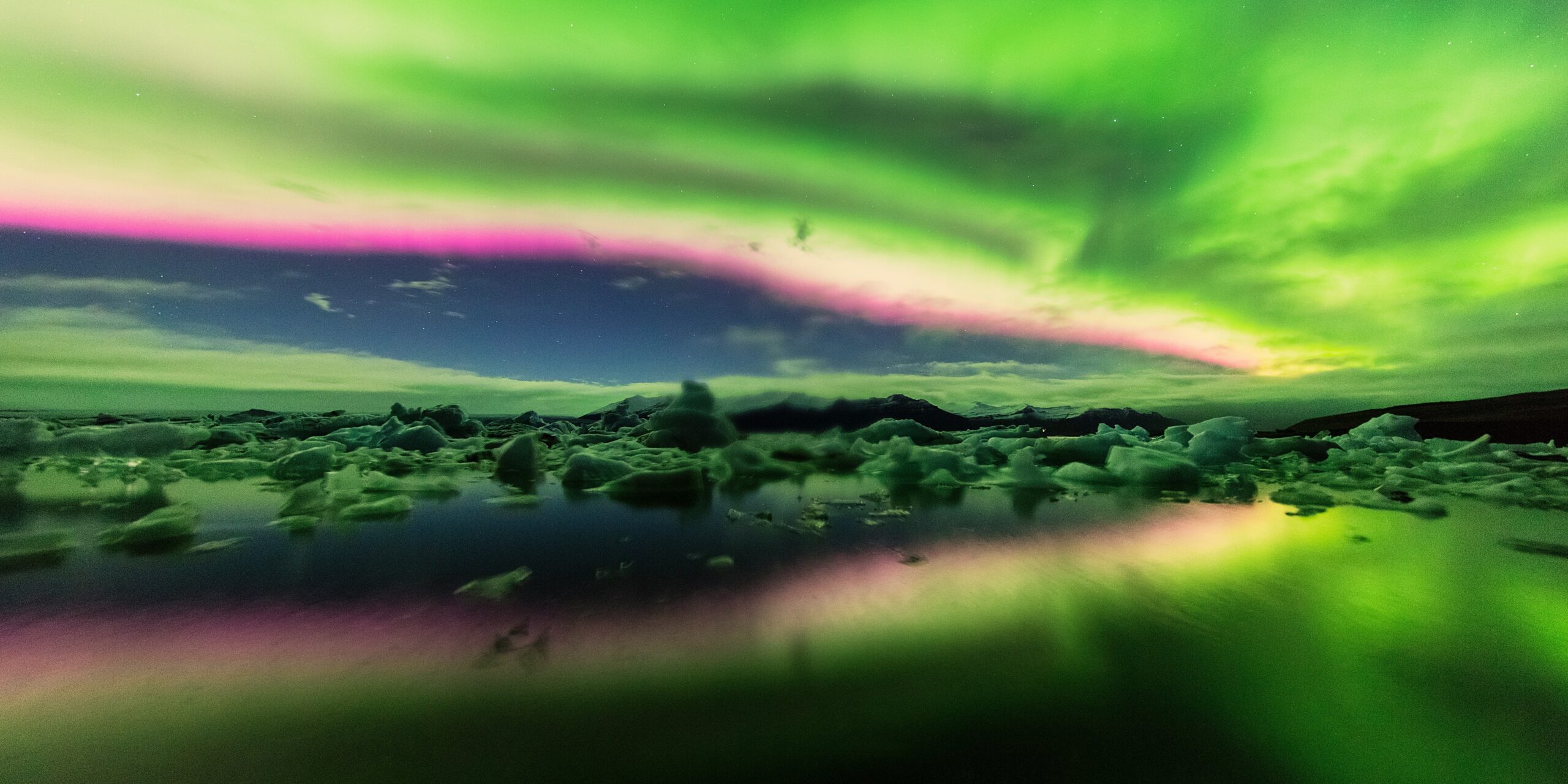
On the night of December 9, 2025, skywatchers across the United States were given the rare opportunity to witness one of nature’s most mesmerizing phenomena—an auroral display visible far beyond the usual high-latitude regions. The event was sparked by a surge in solar activity, driven by a coronal mass ejection (CME) from the sun that interacted with Earth’s magnetic field. This powerful interaction created conditions that allowed the northern lights, typically confined to Arctic regions, to be visible in a much broader expanse of the U.S.
As the CME approached Earth, astronomers and space weather experts predicted that the aurora borealis would be visible from northern states, stretching as far south as parts of the Midwest and even into certain mid-latitude locations. For many, this was a once-in-a-lifetime chance to experience the breathtaking colors and movements of the aurora, which are typically reserved for northern regions like Alaska, Canada, and Scandinavia.
Skywatchers across the country were urged to head to locations with dark, clear skies to get the best view of the event. The auroras occur when solar particles collide with Earth’s atmosphere, creating vivid, colorful light displays that often appear as shimmering curtains of green, pink, purple, and red in the night sky. These displays are not only visually stunning but also serve as a reminder of the dynamic interactions between the Earth and the sun.
While the aurora borealis has always been a captivating sight for those living within reach of the Arctic Circle, the December 9 event was significant for its widespread visibility, bringing the beauty of the northern lights to millions of people who typically wouldn’t have the opportunity to see them. Such events are relatively rare, making them a cause for excitement and anticipation among astronomy enthusiasts and casual observers alike.
For those fortunate enough to witness the aurora, it was a reminder of the vastness and unpredictability of space weather, as well as the wonders of our planet’s natural world. As the CME dissipated and the auroral displays faded, the memory of the spectacular lights remained, leaving skywatchers eagerly awaiting the next rare opportunity to witness such an awe-inspiring phenomenon.