


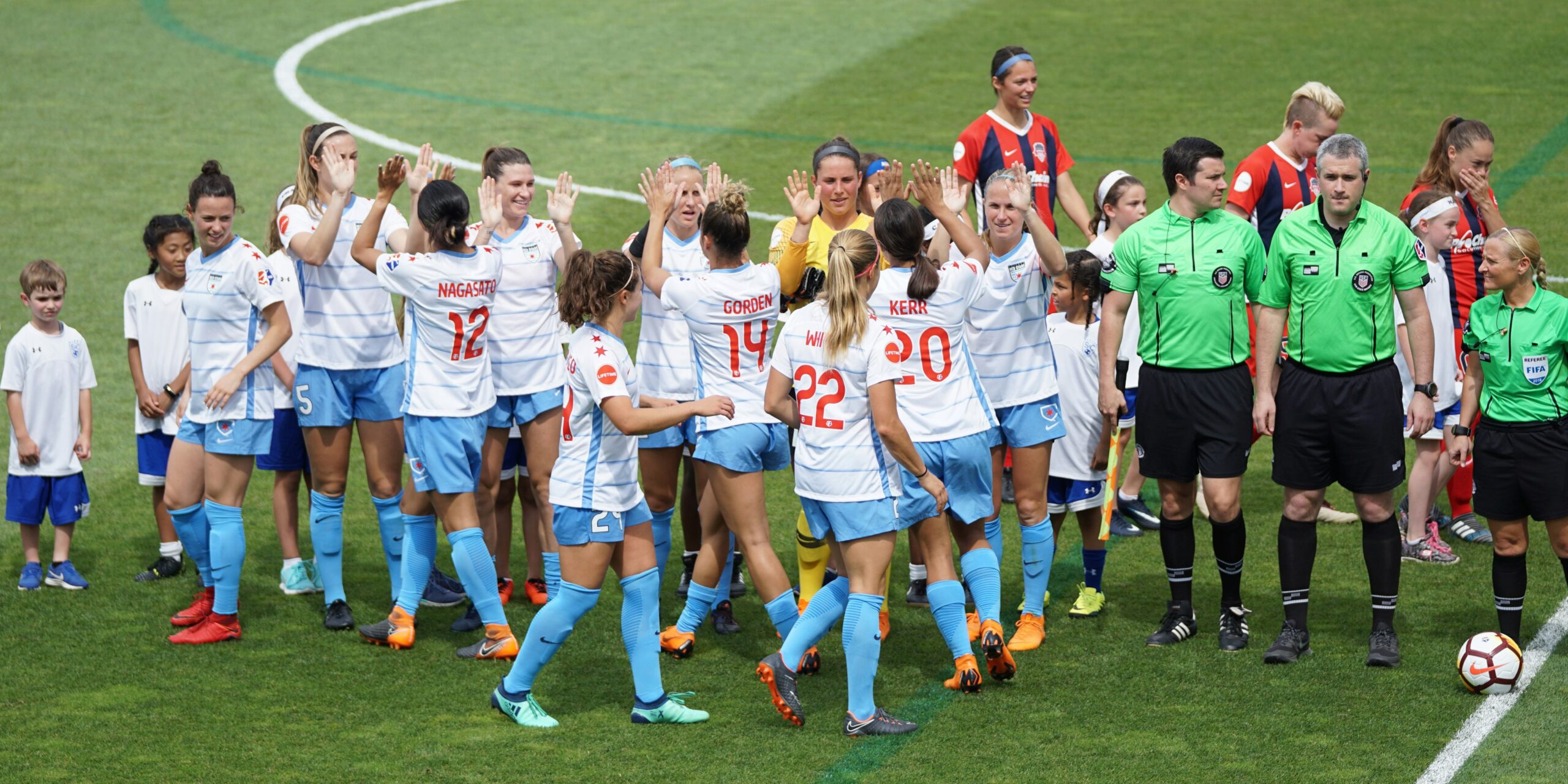
The United States Women’s National Soccer Team is continuing its early 2026 preparations with a scheduled international friendly against Chile, set to take place on Tuesday, January 27, at Harder Stadium in Santa Barbara, California. Announced on January 25, the match is part of the team’s January training camp and serves as an important step in the buildup to the 2026 CONCACAF W Championship, a tournament that carries significant implications for World Cup qualification and regional dominance.
The friendly comes on the heels of a commanding 6–0 victory over Paraguay earlier this month, a performance that reinforced the team’s depth, attacking efficiency, and defensive organization. That result provided an encouraging start to the year and offered coaching staff valuable insight into player form and tactical execution. Against Chile, the U.S. will look to maintain that momentum while continuing to refine combinations and build chemistry across the roster.
Harder Stadium, located on the campus of the University of California, Santa Barbara, will host the match and is expected to provide an energetic atmosphere. The venue has become a familiar setting for U.S. women’s soccer in recent years, particularly for friendlies and preparation matches, offering both strong fan support and a controlled environment for early-season evaluations. For players and coaches alike, the match represents an opportunity to test ideas developed in training under match conditions.
The U.S. squad enters the contest with a blend of experienced veterans and emerging talent, a balance that reflects the team’s broader strategy heading into a busy international calendar. With the CONCACAF W Championship looming later in the year, the coaching staff has emphasized cohesion, tactical discipline, and adaptability. Friendlies such as this one are seen as essential opportunities to evaluate lineup combinations, assess depth, and ensure the team can respond effectively to different styles of play.
Chile, currently ranked 47th in the FIFA women’s world rankings, arrives in California with a roster largely composed of players from its domestic league. While the Chilean side enters as an underdog, the match offers them valuable international experience against one of the world’s most established and successful programs. For Chile, facing the United States provides a benchmark for progress and a chance to expose players to the pace, physicality, and technical standards required at the highest level of the women’s game.
From the U.S. perspective, Chile presents a different tactical challenge than Paraguay. While Paraguay’s approach allowed the Americans to dominate possession and create consistent scoring opportunities, Chile is expected to emphasize defensive structure and organization, potentially forcing the U.S. to be patient and creative in the attacking third. This type of scenario closely mirrors situations the team may face during regional tournaments, making the friendly particularly useful from a preparation standpoint.
The match also serves as a platform for individual players to make an impression early in the year. With competition for roster spots intensifying as major tournaments approach, each friendly carries added significance. Younger players and those newer to the international setup will be eager to demonstrate their readiness, while established veterans aim to reinforce their leadership roles and maintain high performance standards. This internal competition is widely viewed as one of the team’s strengths, helping to sustain consistency and excellence over time.
Beyond the technical and tactical elements, the friendly plays an important role in maintaining public engagement and fan interest as the team builds toward continental competition. The game will be broadcast nationally, providing supporters across the country with an early look at the squad’s form in 2026. Viewer interest is expected to be strong, reflecting the continued popularity of the USWNT and the growing visibility of women’s soccer in the United States.
As the calendar moves forward, the January camp and friendly matches are seen as foundational moments in the team’s broader campaign. While results in friendlies do not directly affect qualification standings, performances often set the tone for the months ahead. Coaches frequently point to these early fixtures as opportunities to establish identity, reinforce standards, and address areas for improvement before the pressure of competitive matches intensifies.
For Chile, the match offers a chance to gain exposure, test resilience, and build confidence despite the challenge posed by a top-ranked opponent. For the United States, it is another step in a carefully structured preparation process aimed at ensuring the team enters the CONCACAF W Championship with clarity, cohesion, and momentum.
As kickoff approaches, attention will center on how the U.S. Women’s National Team continues to evolve under competitive conditions and how effectively it translates training ground progress into match performance. The friendly against Chile may be a single fixture on the calendar, but within the context of a demanding international year, it represents a meaningful checkpoint on the road toward continental success and long-term objectives.
Read Also: https://nvtoday.com/fifa-club-world-cup-2025-set-to-take-place-in-the-u-s/