


Home»Business»Clark County Graduates 26 Advanced EMTs to Strengthen Southern Nevada'…
Clark County Graduates 26 Advanced EMTs to Strengthen Southern Nevada's Emergency Response Workforce


Clark County recognizes 26 new emergency medical professionals as Southern Nevada expands its trained response workforce.
Clark County is expanding Southern Nevada's emergency medical workforce with the graduation of 26 students from its Advanced Emergency Medical Technician Academy, marking another milestone in a regional initiative designed to strengthen emergency response capacity and create employment opportunities for local residents.
The graduates were scheduled to be recognized during a public ceremony at the Clark County Government Center in Las Vegas. Their completion represents the sixth EMT and Advanced EMT training cohort since the academy began operating in early 2025.
The program was developed in response to concerns raised by local ambulance providers and public officials about emergency medical staffing challenges and ambulance response times in the years following the COVID-19 pandemic.
Its approach combines workforce development with public-service needs, providing residents with training that can lead to careers in emergency medical services.
Addressing Southern Nevada's Emergency Staffing Needs
Emergency medical services play an important role in the region's public safety infrastructure.
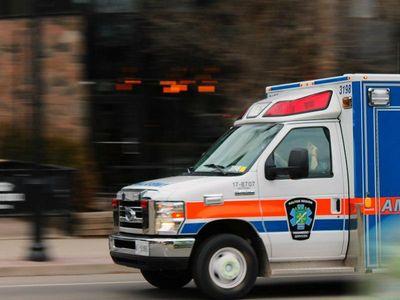
Ambulance personnel provide immediate assistance during medical emergencies, transport patients to healthcare facilities and support emergency operations involving accidents, illness and other incidents.
A shortage of qualified personnel can create additional pressure on emergency response systems, particularly in communities experiencing population growth and increasing demand for public services.
Clark County developed the academy to help address these workforce challenges through structured training and partnerships with organizations involved in emergency medical education and employment.
The initiative offers residents access to training without the tuition costs typically associated with professional education programs.
By connecting workforce development with a specific regional staffing need, the academy seeks to create a more consistent pipeline of qualified emergency medical personnel.
Training and Professional Preparation
The Advanced EMT program combines classroom instruction, practical skills development, clinical experience and certification preparation.
Advanced EMT certification provides additional training beyond the basic emergency medical technician level. It prepares graduates to undertake a broader range of patient-care responsibilities within the scope permitted by their certification and applicable medical protocols.
The training structure is intended to prepare participants for the demands of emergency medical work, where personnel must respond to changing situations and provide care under time-sensitive conditions.
Students must complete the required educational and practical components before meeting applicable state and national credentialing requirements.
The academy's training model also provides participants with experience that can support employment in emergency medical services and other occupations where emergency response skills are valuable.
Program Results Since Its Launch
The November graduating group brings the program's total number of graduates to 151 since its launch.
According to Clark County, the academy has produced 97 EMT graduates and 54 Advanced EMT graduates.
The county also reported that 99 graduates, representing 71.2 percent of the total, had obtained employment. Of those, 78 were working in emergency medical services-related careers.
The program's credential examination results showed that 66 graduates had passed the relevant examinations, representing 47.5 percent of the total number of graduates reported.
These figures provide an early indication of the initiative's workforce development outcomes.
Employment rates and certification results are important measurements because the long-term effectiveness of a training program depends not only on graduation numbers but also on whether participants successfully enter the workforce.
The reported figures also demonstrate the difference between completing an educational program, securing employment and obtaining the required professional credentials.
Partnerships Supporting Workforce Development
The academy operates through partnerships involving Workforce Connections, the EMS Training Center of Southern Nevada and the Clark County Fire Department.
These organizations contribute to the broader workforce development and emergency services environment in which the program operates.
Collaboration is particularly important in emergency medical education because training must reflect professional requirements and the practical needs of employers.
Local ambulance providers and public agencies also have an interest in ensuring that new personnel are adequately prepared for the responsibilities associated with emergency response.
The program's no-cost training model is another important element. Removing tuition expenses can make professional training more accessible to residents who might otherwise face financial barriers to entering the field.
Economic and Community Significance
The academy illustrates how workforce development initiatives can address two connected challenges: employment access and essential public-service staffing.
For graduates, emergency medical training can provide an entry point into a professional career with opportunities for continued education and advancement.
For Southern Nevada communities, a larger pool of trained emergency responders can contribute to the region's capacity to deliver pre-hospital medical care.
However, graduation numbers alone do not establish how much emergency response performance will improve. Staffing levels, recruitment, retention, ambulance availability and operational coordination also influence service delivery.
Continued evaluation will therefore be important as additional cohorts complete the program and enter the workforce.
Clark County's initiative represents a regional effort to connect education with practical employment needs. Its latest graduating class adds another group of trained professionals to Southern Nevada's emergency medical workforce while demonstrating the role local partnerships can play in strengthening essential public services.

NV Today Contributor
This article features partner, contributor, or branded content from a third party. Members of the NV Today editorial staff were not involved in the creation of this content. All views and opinions are those of the contributor alone.
Related Posts



More from Business
- The Cultural Architect: Why Organizational Culture Determines Leadership Success
- Las Vegas Approves $4.2 Million Investment for Downtown Theater and Arts Campus
- MGM Resorts Reports Lower Las Vegas Strip Revenue as Hotel Rates Weigh on Quarterly Results
- Southern Nevada Commercial Real Estate Leader Sees Resilience and Demand Across the Local Market
- Nevada Unemployment Rate Edges Lower as National Jobless Rate Moves Higher
- U.S. Economy Shows Resilience with 3% Growth in Q2 2024
- Federal Reserve Holds Interest Rates Steady in Light of Economic Concerns
- U.S. Business Activity Surges to a 26-Month High Amidst Declining Inflation
- Tech Layoffs Surge as Microsoft and Google Scale Back Workforce
- Trump’s Tariff Threats Shake Markets; Tech Stocks Under Pressure