


Home»Business»Nevada Business Leaders Examine Economic Diversification and Emerging …
Nevada Business Leaders Examine Economic Diversification and Emerging Industries at Las Vegas Forum

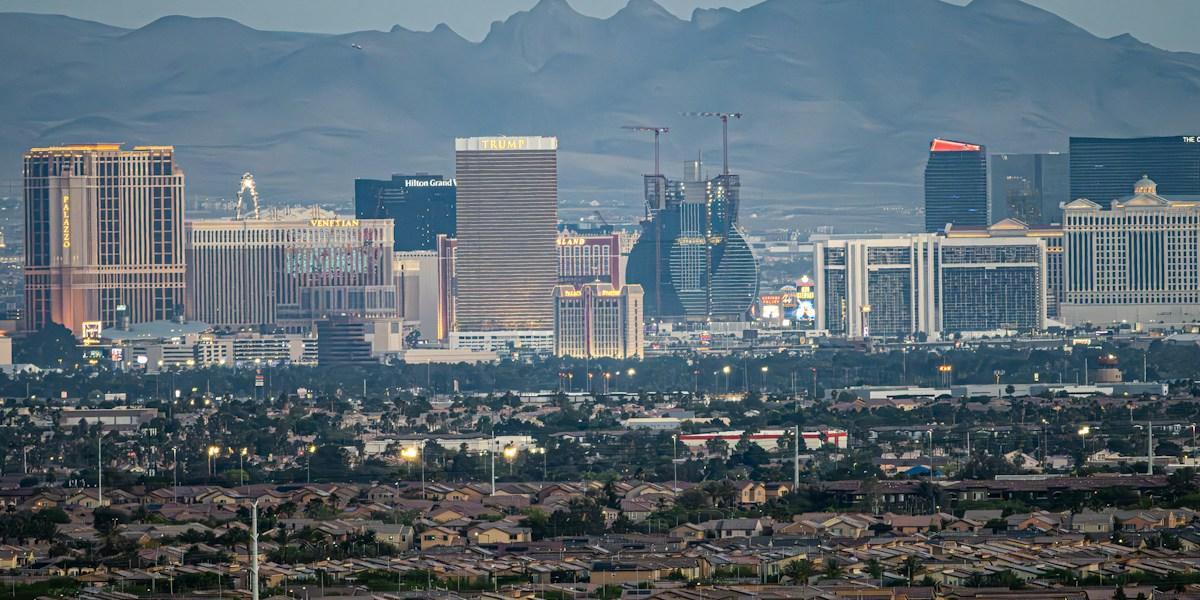
Las Vegas business gathering examines Nevada's economic future, investment incentives and opportunities beyond tourism.
Nevada's economic diversification strategy took center stage during a business gathering in Las Vegas, where industry professionals and state economic development leadership examined opportunities to expand the state's economic base beyond its traditional reliance on tourism, gaming and construction.
The November 18 luncheon, organized by the Las Vegas chapter of the Construction Financial Management Association, featured Tom Burns, executive director of the Nevada Governor's Office of Economic Development.
The event, titled "Nevada's Economic Momentum: Diversification, Incentives, and the Road Ahead," brought attention to the state's development priorities, business incentives and efforts to attract industries capable of creating additional employment and commercial opportunities.
The discussion reflected a continuing effort to strengthen Nevada's position as a destination for businesses operating in emerging and established industries.
Economic Diversification Remains a State Priority
Nevada has historically depended heavily on tourism, gaming, hospitality and construction.
These industries have played a substantial role in the state's economic development, particularly in Southern Nevada, where visitor spending and entertainment-related businesses support a large network of employers.
However, dependence on a concentrated group of industries can expose regional economies to changes in consumer spending, travel patterns and broader economic conditions.
Economic diversification seeks to expand the number of industries contributing to employment, investment and government revenue.
The Governor's Office of Economic Development works with businesses, regional development organizations and other partners to support economic expansion across Nevada.
The November 18 discussion focused on how the state can attract and retain companies while developing opportunities in sectors with potential for long-term growth.
Emerging Industries Receive Attention
The luncheon program identified several industries connected to Nevada's diversification strategy.
These included lithium development, critical minerals, clean energy, advanced manufacturing, aerospace and defense.
Each sector presents different opportunities and challenges.
Critical minerals are important to various manufacturing and energy technologies, while advanced manufacturing can support the production of specialized industrial components.
Clean energy development also creates opportunities involving infrastructure, equipment, engineering and related services.
Aerospace and defense businesses operate through complex supply chains that can include manufacturers, engineering firms, research organizations and specialized service providers.
Expanding these sectors requires more than attracting individual companies. Businesses must also have access to qualified employees, infrastructure, financing and reliable commercial relationships.
Business Incentives and Regional Development
The discussion also addressed Nevada's business incentive programs and the role of regional development authorities.
Tax incentives can influence business location and expansion decisions, particularly when companies are comparing multiple states or municipalities.
However, incentive programs must be evaluated alongside other considerations, including operating costs, workforce availability, transportation access and infrastructure.
Regional development authorities can help connect businesses with local resources and provide information about available opportunities.
Their involvement is particularly relevant because economic conditions differ across Southern Nevada, Northern Nevada and rural communities.
A strategy that supports Las Vegas-based hospitality suppliers may differ from one designed to encourage manufacturing or mineral-related operations in other parts of the state.
The event also examined how the returns associated with incentive programs are evaluated and compared across regions.
Nevada's Fiscal Outlook
Economic development discussions are closely connected to the state's long-term fiscal outlook.
Nevada Public Radio's November 18 coverage of the state's economic outlook reported that the Nevada Economic Forum projected approximately $13.8 billion in total tax revenue for the 2028-29 biennium.
The forecast provides an important planning reference for state government and public institutions.
Revenue projections influence budget planning and decisions involving public services, infrastructure and other government responsibilities.
They also provide context for evaluating how economic activity may affect the state's financial position.
Although forecasts are not guarantees of future collections, they help policymakers assess potential revenue conditions.
Construction and Financial Management
The event's organizing chapter represents professionals working in construction financial management.
This connection is particularly relevant to Nevada because construction activity plays an important role in the state's economy.
Large developments require coordination among contractors, developers, lenders, accountants and project managers.
The financial management of these projects can influence construction timelines, investment decisions and the long-term viability of commercial developments.
The discussion of economic diversification also has implications for construction businesses because emerging industries may require different types of facilities and infrastructure.
Manufacturing sites, energy installations, logistics facilities and specialized industrial properties can create demand beyond traditional residential and hospitality construction.
Opportunities and Practical Challenges
Nevada's ability to diversify its economy depends on several interconnected factors.
Companies considering expansion must evaluate workforce availability, operating expenses, transportation systems and access to suppliers.
Educational institutions and workforce development organizations also have a role in preparing employees for specialized industries.
The state must additionally consider how economic growth is distributed across communities.
A development strategy that produces investment in one region does not automatically create equivalent opportunities elsewhere.
Regional coordination is therefore important to ensuring that economic development efforts reflect the needs of different communities.
A Long-Term Business Development Strategy
The November 18 gathering provided an opportunity for business professionals to examine the relationship between incentives, industrial investment and regional economic planning.
The discussion underscored the importance of developing industries that complement Nevada's established economic strengths while broadening its commercial base.
Tourism and gaming remain central to the state's identity and economic activity, but additional sectors can contribute to a more varied business environment.
For Nevada, the long-term challenge involves translating economic development strategies into sustainable companies, employment opportunities and investment.
The state's diversification efforts will continue to depend on collaboration between government organizations, private businesses, educational institutions and regional economic development partners.

NV Today Contributor
This article features partner, contributor, or branded content from a third party. Members of the NV Today editorial staff were not involved in the creation of this content. All views and opinions are those of the contributor alone.
Related Posts



More from Business
- Global Entrepreneurship Week Brings Nevada's Startup and Business Community Into Focus
- Clark County Graduates 26 Advanced EMTs to Strengthen Southern Nevada's Emergency Response Workforce
- The Cultural Architect: Why Organizational Culture Determines Leadership Success
- Las Vegas Approves $4.2 Million Investment for Downtown Theater and Arts Campus
- MGM Resorts Reports Lower Las Vegas Strip Revenue as Hotel Rates Weigh on Quarterly Results
- Southern Nevada Commercial Real Estate Leader Sees Resilience and Demand Across the Local Market
- Nevada Unemployment Rate Edges Lower as National Jobless Rate Moves Higher
- $50 Million Gift Advances Construction of Nevada's First Standalone Children's Hospital
- The Rutter Organization: How An El Paso Tax Practice Grew Into A Legacy Of Trust
- Las Vegas Expands Its Technology and Business Profile as Major Events Continue to Drive the Local Economy