


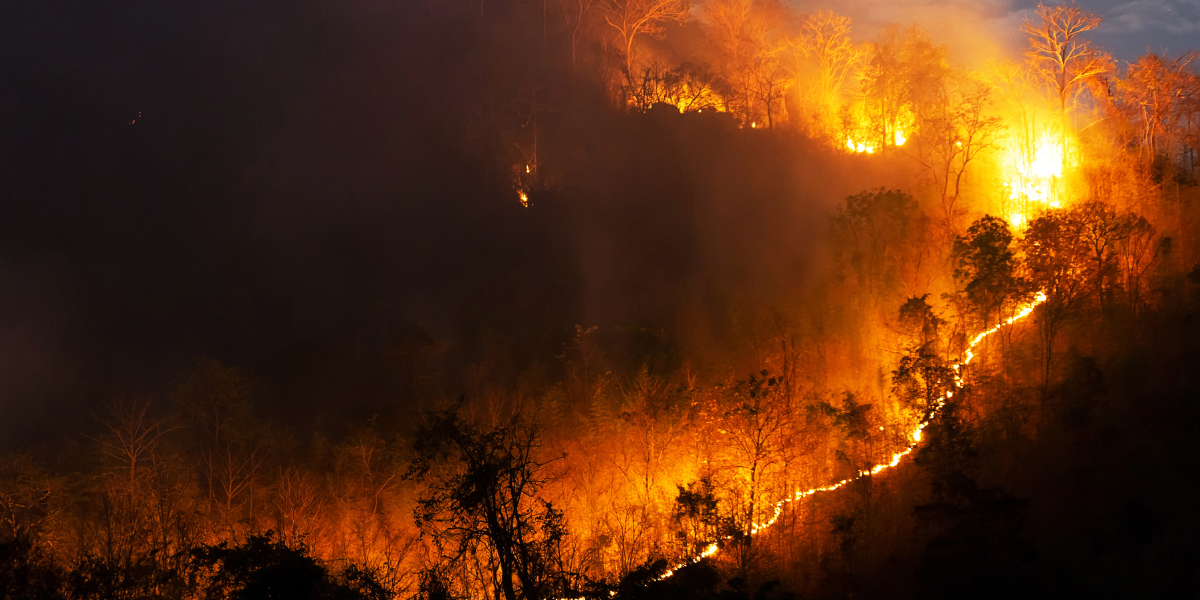
Southern Nevada firefighters were sent north to support firefighting operations in Northern Nevada as crews worked to contain a large wildfire near the Nevada-California border.
The deployment involved fire departments from Clark County, Las Vegas, North Las Vegas and Henderson, which were asked to backfill stations in the Reno area while local crews concentrated on the wildfire response. The coordinated effort demonstrates how Nevada fire agencies can shift resources across the state when a major incident places pressure on local departments.
The wildfire, known as the Bug Fire, was burning near the Nevada-California border and had affected the Cold Springs area outside Reno. Thousands of residents had previously been ordered to evacuate, although those evacuation orders had been lifted by Monday morning.
Fire Departments Send Resources North
The assistance request came through the Clark County Office of Emergency Management after the Truckee Meadows Fire Protection District requested support.
Clark County sent two engines along with a mechanic, battalion chief and logistics officer. Las Vegas Fire & Rescue sent an engine and battalion chief aide, while North Las Vegas and Henderson each provided an engine.
The arrangement allows the Reno-area fire district to dedicate more of its available personnel to the wildfire itself while neighboring departments help maintain emergency coverage for other calls.
That type of mutual aid is particularly important during large wildfires because a local department can quickly find its personnel and equipment committed to a single incident.
A Large Fire in Northern Nevada
The Bug Fire had burned approximately 15,000 acres by the time Southern Nevada crews were deployed, according to the Clark County Fire Department information reported by KSNV.
Containment was estimated at 3% at the time of the Monday morning update. Earlier evacuation orders had affected thousands of residents near Cold Springs, illustrating the potential for a fast-moving wildfire to disrupt communities even when populated areas are not directly engulfed by flames.
Wildfire conditions can change rapidly, and containment percentages provide only a snapshot of an incident at a particular point in time. Firefighters must continually assess weather, terrain, fuel conditions and the behavior of the fire while determining where resources are most needed.
Why Mutual Aid Matters
For Nevada communities, the deployment highlights the importance of regional cooperation during emergencies.
Fire departments normally focus on their own jurisdictions, but major incidents can create demands that exceed the capacity of one agency. Mutual-aid arrangements allow neighboring departments to provide engines, personnel, command staff and logistical support.
In this case, Southern Nevada departments were not sent simply to fight the fire directly. Their primary role was to backfill stations in the Reno area, allowing Truckee Meadows personnel to concentrate on wildfire operations.
That distinction is important because emergency response involves more than the incident receiving the most public attention. Fire departments must continue responding to medical emergencies, vehicle crashes, structure fires and other calls even while a major wildfire is underway.
Preparedness Remains Important
The deployment also comes during a period when Southern Nevada remains under heightened wildfire restrictions.
Clark County implemented Stage 1 fire restrictions because of increased fire danger. The restrictions cover several activities that can create ignition risks, including certain outdoor fires, smoking outside approved areas and operating vehicles or equipment over dry vegetation.
The restrictions reflect the broader challenge facing communities across Nevada during periods of elevated fire danger. Preventing new fires can help preserve firefighting resources for incidents that are already underway.
A Statewide Emergency-Response Effort
The movement of firefighters from Southern Nevada to the Reno area illustrates the interconnected nature of emergency services across Nevada.
The immediate priority remains protecting communities and supporting firefighters working on the Bug Fire. At the same time, the deployment demonstrates how agencies can redistribute resources when one region faces an unusually large demand.
For Nevada residents, the event is a reminder that wildfire response depends on coordinated action across jurisdictions. Firefighters, emergency managers and local communities each play a role in reducing risks and maintaining public safety as conditions evolve.
The Southern Nevada deployment ultimately represents more than a movement of equipment. It is an example of a statewide emergency-response network working to ensure that communities continue receiving fire protection while specialized crews focus on a major wildfire.